
How to Grow on Instagram Fast and Get More Views Organically
Growing on Instagram no longer comes down to posting more and hoping something sticks. Reach now depends on how people respond to your content, how long they watch, whether they share it, and whether Instagram considers it worth recommending beyond your current followers.
Good news? You do not need paid ads, expensive tools, or a massive audience to grow.
What you do need is a clear system.
Instagram CEO Adam Mosseri has repeatedly explained that Instagram does not run on one single algorithm. Reels, Stories, Feed, Explore, and recommendations all use different ranking signals. Once you understand what each area looks for, growth becomes far less confusing.
In this guide, you will learn how to increase Instagram views, reach more non-followers, improve watch time, use Trial Reels, avoid recommendation problems, and make better use of Instagram’s free growth tools.
No vague advice. No “just be consistent” nonsense. Only practical strategies you can track, test, and repeat.
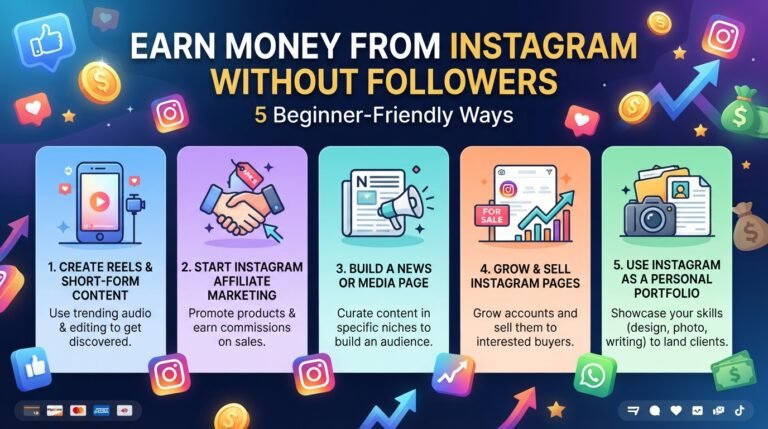
Read More: Earn Money from Instagram Without Followers: 5 Beginner-Friendly Ways
- How Instagram’s Algorithm Works Today
- The 3 Instagram Metrics That Matter Most
- How to Audit Your Last 20 Instagram Posts
- Why Non-Follower Reach Matters for Instagram Growth
- How to Get Your Reels Recommended to More People
- How to Use Trial Reels for Faster Instagram Growth
- What Instagram Shadow Banning Really Means
- How the Instagram Stories Algorithm Works
- Free Instagram Tools That Can Help You Grow
- How to Use Facebook Cross-Posting for Extra Reach
- A Simple Instagram Growth Strategy to Follow
- Common Instagram Growth Mistakes
- Final Thoughts
How Instagram’s Algorithm Works Today
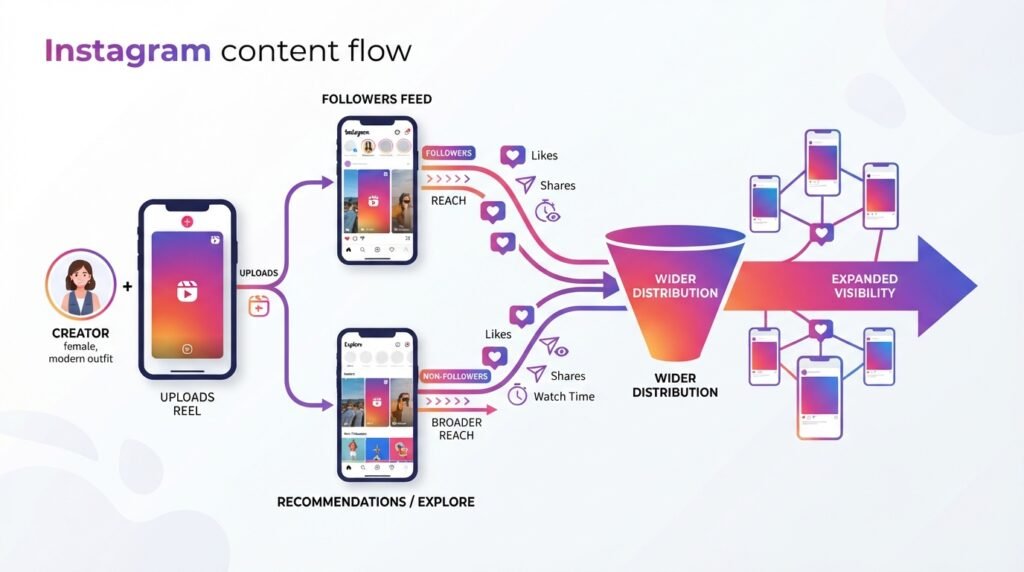
Instagram uses several ranking systems rather than one universal algorithm.
Each part of the app has a different purpose.
Feed mainly helps users see content from people they already follow. Stories focus on relationships and frequent interactions. Explore helps people discover new accounts. Reels push entertaining, useful, or engaging videos to both followers and non-followers.
Earlier, Instagram usually showed a new Reel to some of your followers first. If people liked, commented, shared, or watched it for long enough, Instagram expanded its reach and showed it to more users.
That process still happens, but newer features have changed content distribution.
Trial Reels, for example, allow creators to show a Reel to non-followers before sharing it with their existing audience. You can test an idea, review performance, then decide whether it deserves wider exposure.
So, Instagram growth now follows two common paths:
Regular content distribution: Your Reel reaches followers first, then expands toward non-followers when engagement looks promising.
Trial Reel distribution: Your Reel reaches non-followers first, giving you a cleaner way to test whether a topic, hook, or format can attract new viewers.
Both methods serve one goal: helping Instagram predict who will enjoy your content.
Instagram does not push content because you worked hard on it. It pushes content when viewers give strong signals.
Someone pauses.
Someone watches longer than expected.
Someone shares it with a friend.
Someone visits your profile.
Someone follows you after watching.
Those actions tell Instagram, “Show this to more people.”
That is why understanding audience behaviour matters far more than chasing random hacks.
The 3 Instagram Metrics That Matter Most
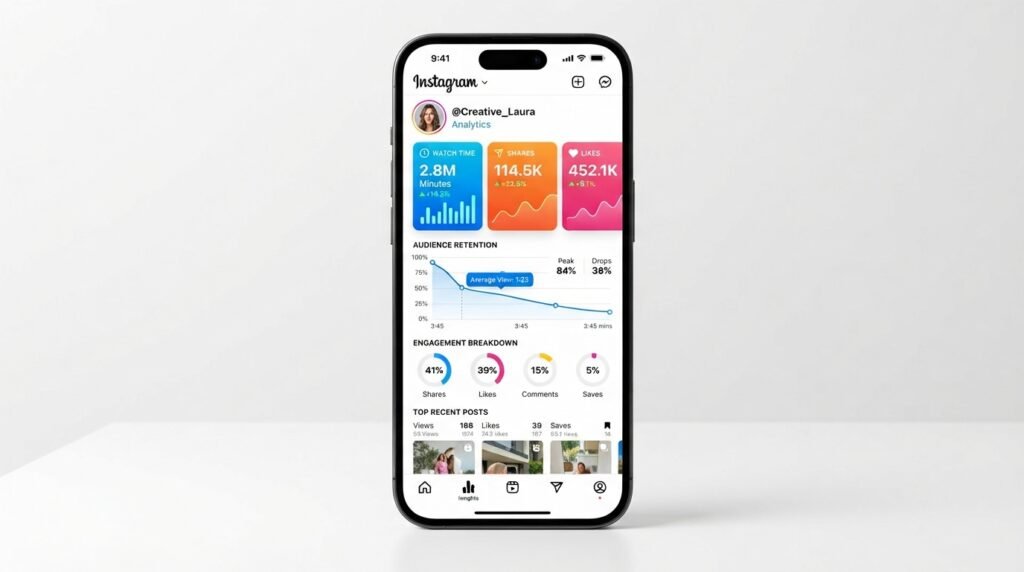
Instagram gives you plenty of numbers, but not every metric deserves equal attention.
Follower count can look impressive. Comments can feel encouraging. Saves matter in many niches. Still, when you want to judge whether a Reel can reach more people, three signals deserve priority: likes, shares, and watch time.
1. Likes Compared to Views
Likes show whether viewers enjoyed your content enough to react.
Do not look at likes as a standalone number. Compare them with total views.
A Reel with 500 likes from 5,000 views usually sends a stronger engagement signal than one with 700 likes from 50,000 views. Context changes everything.
Likes can also reveal how your existing followers respond to a topic. When familiar viewers regularly like one type of content more than others, you have found a useful clue about audience preference.
Still, likes can mislead.
Friends, relatives, loyal followers, or regular supporters may tap like without watching your full video. That makes likes helpful, but not reliable enough to guide your entire content strategy.
2. Shares
Shares often reveal whether a Reel offers enough value for someone to pass it along.
People share content because it feels useful, relatable, surprising, funny, or worth discussing. A share carries more weight than a casual like because it puts your content in front of another person.
For creators trying to reach non-followers, shares matter a great deal.
Check how many shares each Reel receives, then compare that number across similar view counts. A Reel with moderate views but unusually high shares may have stronger growth potential than one with bigger views and weak sharing activity.
Shareable content usually has one clear quality:
It makes viewers think, “Someone else needs to see this.”
That could come from a useful tip, a strong opinion, a common mistake, a relatable moment, or a simple step-by-step solution.
3. Watch Time
Watch time often gives you the clearest picture of content quality.
A viewer can like your Reel in one second. They cannot fake watching it for longer.
Instagram pays close attention to how long people stay, whether they finish the video, and whether they replay parts of it. Strong watch time tells the platform your content held attention.
Two numbers matter here:
Total watch time shows how much combined viewing your Reel generated.
Average watch duration shows how long an average person stayed.
Suppose your Reel lasts 30 seconds, but average watch duration sits around five seconds. Your hook likely failed, pacing dragged, or your opening did not match what viewers expected.
Now imagine average watch duration reaches 20 seconds. That gives Instagram a much stronger reason to keep recommending your Reel.
Watch time also helps you judge content more honestly.
A Reel may receive plenty of likes from followers, yet lose most viewers within the first few seconds. Another Reel may receive fewer likes, but hold attention much longer and reach far more non-followers.
In most cases, the second Reel offers better growth potential.
Focus less on vanity numbers and more on retention.
Ask yourself:
Did people stay?
Did they keep watching?
Did they reach the payoff?
Did they replay any part?
Those answers tell you far more than likes alone.
How to Audit Your Last 20 Instagram Posts

Guessing slows growth. Data shows what to repeat.
Open Instagram Insights and review your last 20 posts or Reels. Then create a simple spreadsheet with one row for each piece of content.
Track:
- Topic
- Content format
- Reel length
- Views
- Likes
- Shares
- Average watch duration
- Percentage of non-followers reached
- Followers gained
You do not need a complicated dashboard. A basic Excel or Google Sheets file works perfectly.
Once your numbers are added, look for patterns.
Which topics brought the most views?
Which Reels reached the highest percentage of non-followers?
Which videos gained followers instead of only attracting likes?
Which posts received strong shares despite average reach?
One high-performing Reel can happen by chance. Three strong Reels around a similar topic usually point toward real audience demand.
For example, imagine your tutorial Reels repeatedly reach more non-followers, while personal updates mainly engage existing followers. That tells you tutorials work better for discovery, while personal content supports connection.
Both formats can stay in your strategy, but they serve different jobs.
Next, identify your top three posts based on a combination of watch time, shares, non-follower reach, and followers gained. Do not choose winners based on views alone.
A Reel with 30,000 views and two new followers may offer less long-term value than one with 10,000 views and 150 new followers.
Now study each winning post closely:
- What topic did you cover?
- What words appeared in the opening hook?
- How long was the Reel?
- How quickly did you reach the main point?
- Did you use text on screen?
- What made people share it?
- What promise did the caption make?
Then create more content around the same winning pattern without copying yourself word for word.
You can turn one successful topic into:
- A beginner version
- A list of mistakes
- A step-by-step tutorial
- A myth-versus-fact Reel
- A quick checklist
- A personal example
- A before-and-after breakdown
That approach helps you double down without sounding repetitive.
The goal is not to recreate one viral post forever. The goal is to identify what your audience already responds to and build a stronger content system around it.
Why Non-Follower Reach Matters for Instagram Growth
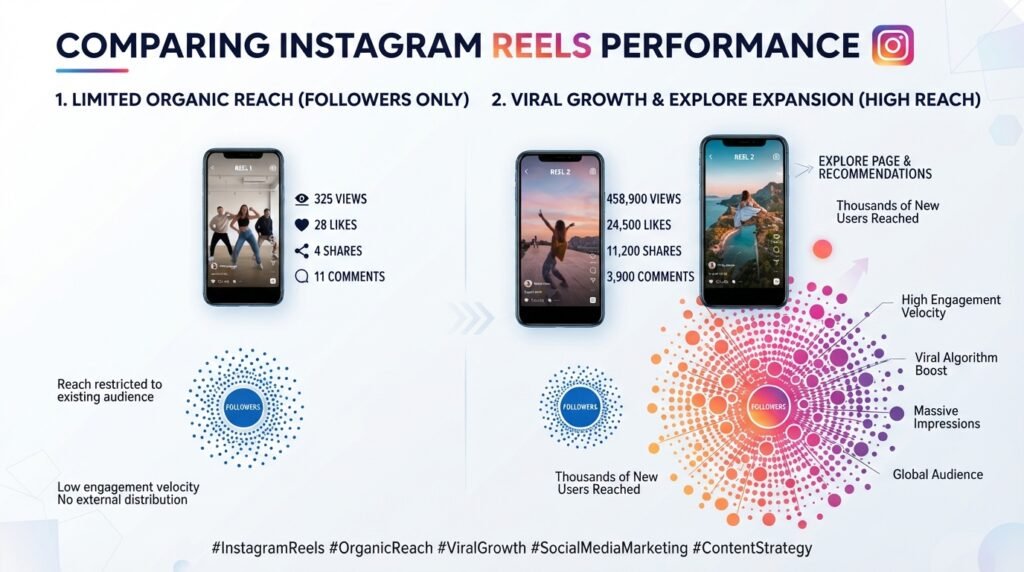
If your content only reaches current followers, growth will stay limited.
You may still receive likes, comments, and Story replies, but your account will keep circulating within the same audience. To gain new followers, Instagram must show your content to people who do not know you yet.
That usually happens through:
- Reels recommendations
- Explore
- Suggested posts
- Trial Reels
- Facebook recommendations
Non-follower reach gives you one of the clearest signs that Instagram sees discovery potential in your content.
For example, suppose one Reel gets 20,000 views, but 90% come from existing followers. Another gets 12,000 views, with 75% coming from non-followers.
The second Reel may offer more growth value because it introduces your account to a fresh audience.
Still, reach alone does not guarantee followers.
Your content must also give viewers a reason to visit your profile and stay.
A person may enjoy one Reel without following. That usually happens when the post feels entertaining but disconnected from your wider content.
Strong follower-converting content does three things:
- Solves a clear problem.
- Matches your account’s main topic.
- Makes viewers expect more useful content from you.
For example, a social media creator who posts one viral comedy Reel may gain views but few relevant followers. A practical Reel called “Three reasons your Instagram Reels stop at 500 views” may attract fewer casual viewers but bring more targeted followers.
That difference matters.
You do not need random viral reach. You need reach from people likely to care about your next post.
How to Check Non-Follower Reach
Open a Reel’s Insights and review how many views or accounts reached came from followers versus non-followers.
Then compare that percentage with:
- Shares
- Watch time
- Profile visits
- Follows gained
A high non-follower percentage with weak profile visits may mean your content lacks a clear next step.
A high non-follower percentage with strong profile visits but few follows may mean your bio, pinned posts, or overall profile does not clearly explain why someone should follow you.
A high non-follower percentage with strong follows means you have found a topic and format worth repeating.
Turn More Views Into Followers
When your Reel reaches new people, make your account easy to understand within seconds.
Use a clear profile photo, a simple bio, and pinned posts that explain your best value.
Your Reel should also connect naturally with the rest of your content.
A simple call to action can help, but avoid sounding desperate.
Instead of saying:
“Please follow me.”
Try:
“Follow for practical Instagram growth tips.”
Or:
“I share more content strategies like this every week.”
Clear positioning works better than begging for a follow.
Instagram growth becomes easier when every Reel has a purpose. Some posts attract new viewers. Some build trust. Others convert profile visitors into followers.
When those pieces work together, views stop being empty numbers and start creating steady account growth.
How to Get Your Reels Recommended to More People
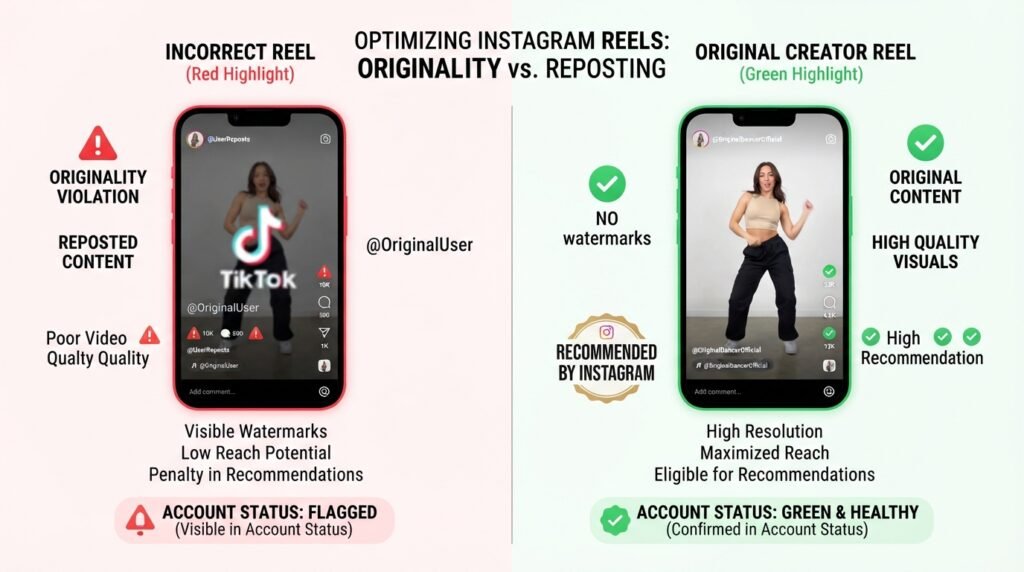
Instagram recommendations open the door to non-followers. Without them, even good content can struggle to move beyond your existing audience.
No single trick guarantees reach, but a few practical steps can improve your chances.
Avoid Watermarks and Recycled Videos
Do not upload Reels carrying visible watermarks from TikTok, YouTube Shorts, or another platform.
Instagram wants content that feels native to Instagram. Recycled videos with competing platform logos may receive weaker distribution, especially when they look copied rather than adapted.
Create one clean master video, then upload separate versions to each platform.
Your own brand logo may not always cause a problem, but oversized logos, promotional banners, or repeated branding can make a Reel feel like an advertisement. Keep branding subtle and let content take centre stage.
Check Your Instagram Account Status
Before blaming the algorithm, check whether your content remains eligible for recommendations.
Go to:
Settings and activity → Account Status
Review whether Instagram has flagged any posts, profile details, or account activity.
Green indicators usually mean your account remains eligible for wider recommendations. A warning may explain why certain content cannot reach non-followers.
When something has been flagged, review the reason carefully. Remove or appeal content only when needed rather than deleting random posts out of panic.
Account Status should become part of your regular audit, especially after a sudden reach drop.
Keep Reels Focused and Easy to Finish
Shorter does not automatically mean better, but every second must earn its place.
If a Reel needs 20 seconds, do not stretch it to 60. When a topic needs two minutes, give viewers enough value to justify staying.
Instagram may recommend longer Reels, but shorter, tightly edited videos often have an easier path to strong completion rates.
Cut:
- Long greetings
- Repeated points
- Slow introductions
- Unnecessary pauses
- Calls to action before delivering value
Start with the problem, promise, or result.
Instead of:
“Hi everyone, welcome back to my page. Today I wanted to talk about…”
Try:
“Your Reels may be losing reach because of these three mistakes.”
One opening creates delay. The other creates curiosity.
Add Music When It Improves the Post
Music can make carousels, photos, and Reels feel more engaging, but it should support the content rather than distract from it.
Use music when it matches the mood, pacing, or message. Keep volume low when speaking, and choose audio that does not compete with your voice.
For photo posts and carousels, relevant music may help your content appear in more discovery surfaces. Still, music cannot rescue weak visuals or an unclear message.
Treat it as an enhancement, not a growth shortcut.
Publish Original Content
Original content gives Instagram a stronger reason to recommend your account.
Original does not mean every idea must be completely new. Most topics have already been discussed. Your angle, explanation, examples, editing, or experience should make the content yours.
You can respond to a trend, explain an industry update, or discuss a competitor’s idea. Just add genuine value rather than copying their script, visuals, and structure.
A simple originality test helps:
Could someone understand why this content came from you?
Your perspective may come from:
- Personal results
- A clear opinion
- Original examples
- Better explanations
- Fresh research
- A niche-specific angle
- A tested process
Copied content may bring a few quick views, but it rarely builds a memorable account.
Make Every Reel Recommendation-Friendly
Before publishing, check five things:
Does the opening earn attention quickly?
Can someone understand the Reel without knowing you?
Does it offer a clear payoff?
Would someone share it with another person?
Does it fit the topic people should follow you for?
When all five answers are yes, your Reel has a far better chance of moving beyond your current audience.
How to Use Trial Reels for Faster Instagram Growth
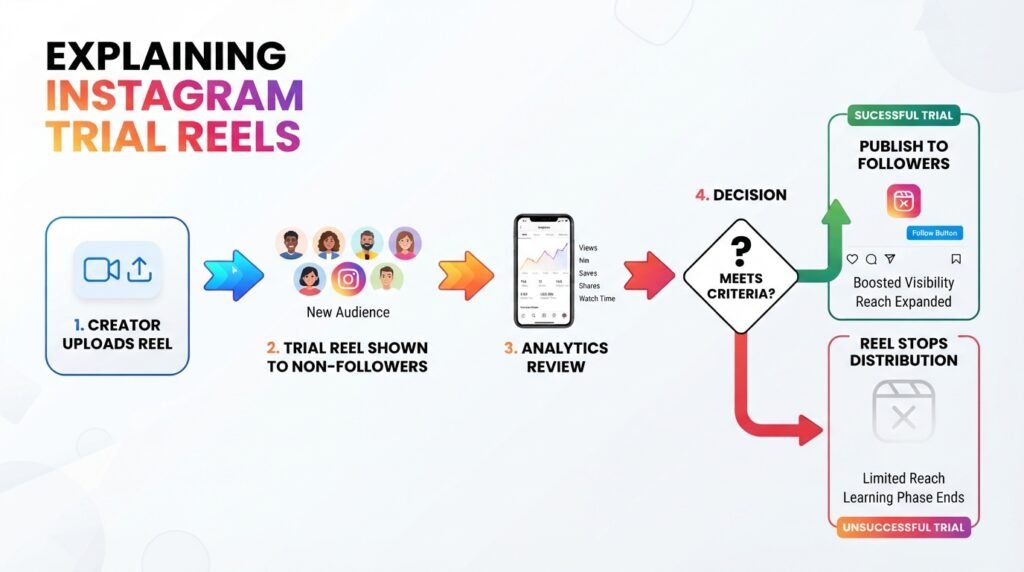
Trial Reels give you a simple way to test content with non-followers before pushing it to your existing audience.
That makes them useful for experiments.
You can test a new topic, hook, editing style, content format, or niche angle without filling your followers’ feeds with every idea you create.
When you publish a Trial Reel, Instagram initially shows it to people who do not follow you. You can then review performance and decide whether to share it more widely.
What to Test With Trial Reels
Use Trial Reels for content where you are unsure about audience response.
Good testing ideas include:
- A new topic
- A different opening hook
- A longer or shorter format
- A stronger opinion
- A new visual style
- A beginner-focused version of your usual content
- A trend adapted to your niche
Avoid using Trial Reels only for weak or rushed content. You still need a strong hook, clean editing, and clear value.
Think of them as a testing tool, not a dumping ground.
A Simple Weekly Trial Reel Strategy
Suppose you usually publish ten Reels each week.
Instead of posting all ten directly to followers, you could publish five regular Reels and test five through Trial Reels.
Your schedule may look like this:
- Three proven educational Reels
- Two relationship-building Reels
- Three Trial Reels around new topics
- Two Trial Reels testing new hooks or formats
After enough data comes in, compare:
- Watch time
- Shares
- Likes
- Profile visits
- Followers gained
- Non-follower reach
Then share the strongest Trial Reels with your followers and leave weaker experiments behind.
How to Judge a Trial Reel
Do not judge performance using views alone.
A Trial Reel with fewer views may still deserve wider distribution when it attracts strong watch time, shares, profile visits, or follows.
For example, one Trial Reel may receive 15,000 views but bring only three followers. Another may receive 6,000 views and bring 80 followers.
The second Reel likely matches your target audience better.
Look at quality of reach, not just quantity.
Use Trial Reels to Protect Content Quality
Posting more can help you learn faster, but your followers do not need to see every experiment.
Trial Reels let you test ideas without making your main feed feel scattered.
They can also help when your account covers one clear topic, but you want to explore a nearby subtopic.
For example, an Instagram marketing creator may normally post Reel growth tips but wants to test content about personal branding. Trial Reels can reveal whether that audience overlap exists before making personal branding a regular content pillar.
Do Not Depend on Trial Reels Alone
Trial Reels can improve testing, but they cannot fix weak content.
A poor hook will still lose viewers. A copied idea will still feel forgettable. A confusing profile will still struggle to convert visitors into followers.
Use Trial Reels alongside a stronger system:
Create original content, study retention, track shares, improve your profile, and repeat topics that consistently bring relevant followers.
That combination makes Trial Reels far more useful.
What Instagram Shadow Banning Really Means
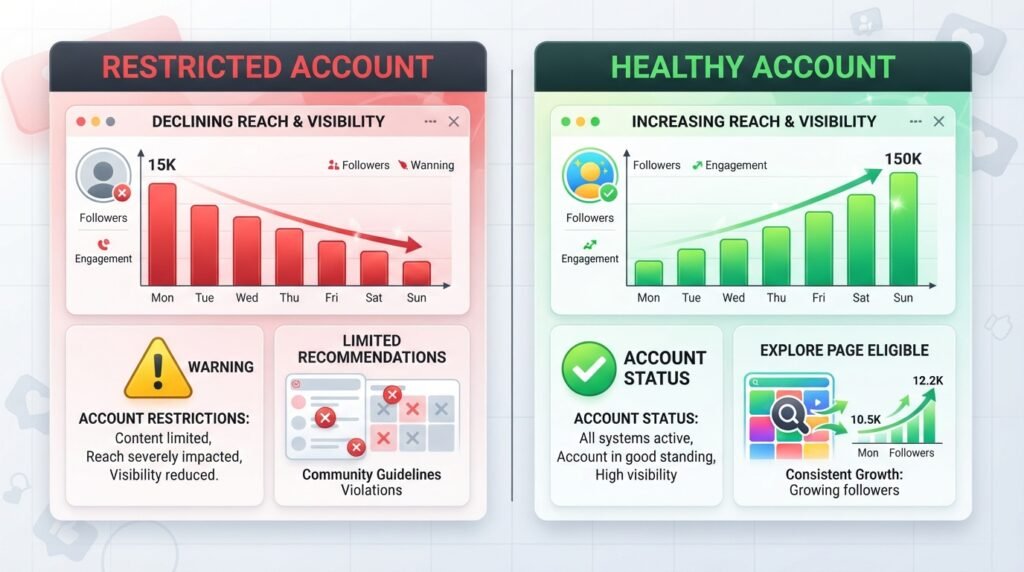
“Shadow ban” gets blamed for almost every reach drop on Instagram.
Sometimes an account genuinely loses recommendation eligibility. Other times, content simply performs poorly.
Those are not the same problem.
A real restriction usually means Instagram limits how widely your content can appear, especially to non-followers. Your posts may still reach existing followers, but visibility through Explore, suggested posts, or Reels recommendations can fall sharply.
Signs Your Content May Be Restricted
Watch for patterns rather than one weak post.
Possible warning signs include:
- Non-follower reach suddenly falling across several posts
- Reels no longer appearing in recommendations
- A warning inside Account Status
- Specific posts marked as ineligible for recommendation
- Reach dropping immediately after a guideline violation
One Reel performing badly does not prove shadow banning.
Even several weak Reels may come from poor hooks, repetitive topics, weak retention, or content your audience no longer wants.
Check evidence before assuming Instagram has restricted your account.
Check Account Status First
Open Instagram settings and review Account Status.
Instagram may show whether your profile or content can be recommended to people who do not follow you. It may also identify posts, captions, profile elements, or activity causing a problem.
When Instagram flags something, read the explanation carefully.
You may be able to edit the content, remove it, or request a review when you believe the decision was incorrect.
Do not delete half your account without knowing what caused the issue. Random deletion can remove useful content without restoring reach.
Avoid Copied and Reposted Content
Accounts built around copied videos face a higher risk of weak distribution.
Downloading someone else’s Reel, changing a few words, and reposting it does not create original content. Even when Instagram does not remove it, the platform may prefer the original source.
Use trends as inspiration, but rebuild them around your own voice, examples, visuals, or experience.
A familiar idea can still feel original when your explanation adds something useful.
Stop Using Spammy Tactics
Spam signals can hurt trust and make an account look manipulative.
Avoid:
- Repeating unrelated hashtags
- Using banned or misleading hashtags
- Posting the same comment across many accounts
- Mass following and unfollowing
- Buying likes, views, or followers
- Copying captions word for word
- Uploading several near-identical Reels
Automation that imitates unnatural activity may create the same problem.
Use tools for scheduling, planning, and analytics, not fake engagement.
Follow Recommendation Guidelines
Instagram’s Community Guidelines decide what can remain on the platform. Recommendation guidelines go a step further and decide what can be shown widely to new audiences.
Some content may remain visible on your profile while still being excluded from recommendations.
Sensitive, misleading, low-quality, or borderline content may therefore receive limited discovery even without a full account penalty.
Keep your posts accurate, useful, original, and suitable for broad audiences when growth remains your priority.
What to Do After a Reach Drop
Start with a simple review:
- Check Account Status.
- Review recently flagged or removed content.
- Compare follower and non-follower reach.
- Study watch time across your latest posts.
- Stop any spammy activity or risky automation.
- Publish several strong, original posts.
- Give Instagram fresh performance signals.
Do not expect one new Reel to repair everything overnight.
Focus on consistency, clean account activity, and content people genuinely watch and share.
Many so-called shadow bans turn out to be content problems. Fixing retention, relevance, and originality often helps more than chasing secret recovery tricks.
How the Instagram Stories Algorithm Works
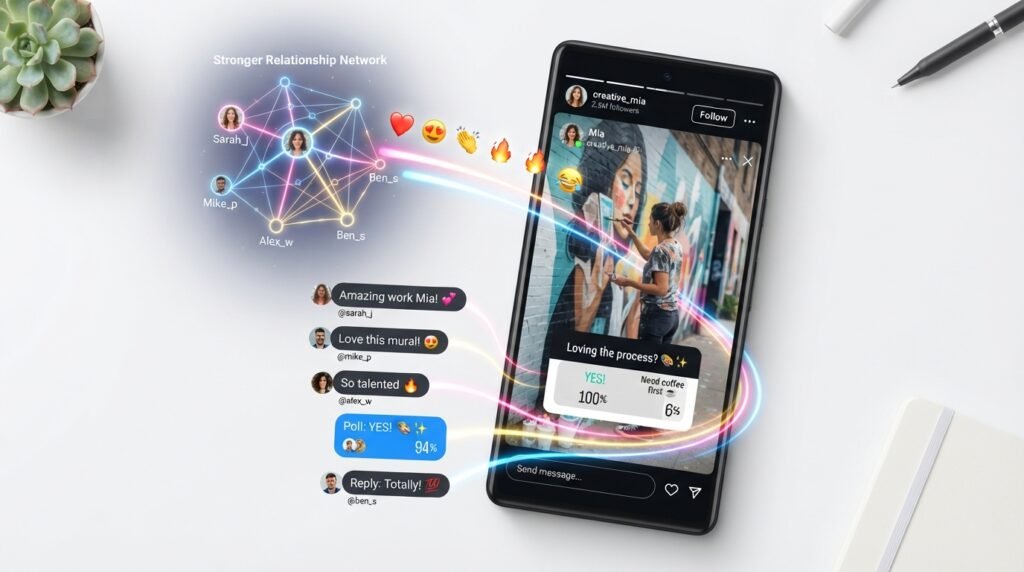
Instagram Stories serve a different purpose from Reels.
Reels help you reach new people. Stories help you stay close to people who already follow you.
That distinction matters.
A Story usually will not bring a flood of new followers, but it can strengthen trust, increase replies, and keep your account visible to existing followers. Stronger relationships can also support better engagement when you publish new posts or Reels.
What Instagram Looks at for Stories
Instagram watches how people interact with your Stories.
Important signals include:
- How often someone opens your Stories
- Whether they reply
- Whether they react
- Whether they tap through quickly
- Whether they exit
- Whether they watch several Stories in a row
- How often they interact with your account overall
When followers regularly open, reply to, or react to your Stories, Instagram learns that they care about your updates.
As a result, your future Stories may appear closer to the front of their Story tray.
Use Stories to Build Connection
Stories work best when they feel natural.
You do not need to turn every update into a polished production. In fact, over-edited Stories can sometimes feel less personal.
Share content such as:
- Behind-the-scenes moments
- New post announcements
- Quick opinions
- Small achievements
- Work-in-progress updates
- Polls and questions
- Useful tips
- Personal moments connected to your niche
- Industry news or trends
For example, a digital marketing creator might share a quick screenshot of a Reel’s performance, explain one lesson, then direct viewers to the full post.
That creates a bridge between casual Story content and deeper feed content.
Do Not Post Without a Reason
Posting 20 random Stories every day does not guarantee stronger reach.
Too many weak updates can make people tap through or mute your account.
Focus on relevance.
A few useful or engaging Stories often perform better than a long chain of updates with no clear point.
Before posting, ask:
Will this inform, help, entertain, or connect with my audience?
If not, it may not need to go live.
Use Interactive Stickers Carefully
Polls, question boxes, emoji sliders, and quizzes can increase interaction.
Still, avoid using them just for the sake of it.
A useful poll might ask:
“Which Reel topic should I cover next?”
A weak poll might ask something unrelated to your niche with no follow-up.
Interactive Stories work best when they help you learn something about your audience or start a real conversation.
Share Reels Without Killing Curiosity
Many creators repost a full Reel to Stories and expect followers to tap through.
Often, viewers simply watch enough of the preview and move on.
Instead, create curiosity.
Add a short line such as:
“Most creators miss the third mistake.”
Or:
“This one change improved my watch time.”
Give people a reason to open the Reel rather than showing everything in the Story.
How Often Should You Post Stories?
There is no perfect number.
Some accounts benefit from daily Stories. Others perform well with a few thoughtful updates each week.
Consistency helps, but relevance matters more.
A practical approach:
- Share Stories when you publish important content
- Add behind-the-scenes updates a few times a week
- Use polls or questions when you need audience feedback
- Avoid posting only to stay visible
Stories should make followers feel closer to your account, not tired of seeing it.
Free Instagram Tools That Can Help You Grow
Instagram already gives creators several useful tools, yet many people never open them.
Before paying for expensive analytics software, use the free data and recommendations available inside your account.
Instagram Best Practices
Open your Professional Dashboard and look for the Best Practices section.
Instagram uses this area to share guidance around:
- Content creation
- Engagement
- Reach
- Monetization
- Platform guidelines
- Reel performance
Recommendations may change according to your account activity, which makes this section more useful than generic advice found online.
You may see suggestions about stronger hooks, Reel length, posting habits, audience engagement, or content quality.
Check Best Practices regularly, especially after publishing several new posts. Instagram may highlight patterns or areas worth improving.
Do not follow every suggestion blindly, though. Compare advice with your own Insights.
Your audience data should always have the final say.
Instagram Inspiration Section
The Inspiration section can help when you run out of content ideas or want to understand what performs well in your niche.
You may find examples from creators, trending formats, official Instagram tips, or accounts producing similar content.
Use it to study:
- Opening hooks
- Video structure
- Editing pace
- Calls to action
- Visual presentation
- Content topics
- Audience questions
Avoid copying another creator word for word.
Instead, ask why a post works.
Maybe the hook creates curiosity. Perhaps the creator explains one problem quickly. Maybe the video uses clear text, a surprising example, or a strong payoff.
Take the principle, then create your own version.
Instagram Insights
Insights should guide your content decisions.
Useful metrics include:
- Accounts reached
- Follower versus non-follower reach
- Views
- Watch time
- Average watch duration
- Likes
- Shares
- Saves
- Profile visits
- Follows gained
Review performance weekly rather than checking numbers every few minutes.
Daily results can fluctuate. Weekly patterns provide a clearer picture.
Create one simple rule:
Never plan next month’s content without reviewing last month’s data.
That small habit can save hours of wasted effort.
Competitor Research
Instagram may suggest similar accounts inside Inspiration or discovery sections.
Study competitors, but do not obsess over follower counts.
Look at:
- Which topics repeatedly perform well
- Which posts receive unusual engagement
- How creators open their videos
- What questions appear in comments
- Which formats they repeat
- What their audience still complains about
Comments often contain better content ideas than the post itself.
When people ask follow-up questions, mention confusion, or request examples, they reveal unmet demand.
Turn those gaps into original content.
How to Use Facebook Cross-Posting for Extra Reach
Instagram allows creators to share or recommend Reels on Facebook.
You can usually find cross-posting controls inside account settings or while publishing a Reel.
When enabled, your content may reach Facebook users who would never have discovered you through Instagram alone.
That gives one piece of content another chance to perform.
Cross-posting works best when your Reel:
- Makes sense without Instagram-specific context
- Uses readable captions
- Has no competing watermark
- Starts with a clear hook
- Covers a broadly useful topic
Avoid mentioning features available only on Instagram unless you explain them clearly.
For example, saying “check my latest carousel” may confuse someone watching on Facebook.
Make each Reel understandable on its own.
Also remember that Facebook views do not automatically equal Instagram followers. Your profile positioning still matters.
A clear bio, useful pinned posts, and consistent topic can help new viewers understand why they should follow.
A Simple Instagram Growth Strategy to Follow
Instagram growth becomes easier when you stop treating every post like a separate experiment.
Build one repeatable system.
Step 1: Choose Clear Content Pillars
Pick three to five main topics connected to your niche.
For an Instagram marketing account, content pillars might include:
- Reel growth
- Content planning
- Instagram analytics
- Personal branding
- Monetization
Clear pillars help followers know what to expect and make content planning faster.
Step 2: Audit Your Last 20 Posts
Record views, watch time, shares, non-follower reach, and followers gained.
Identify your strongest topics and formats.
Step 3: Create More Winning Content
Take top-performing topics and produce new angles.
Do not abandon a useful topic after one post.
Turn it into a series.
Step 4: Improve the First Few Seconds
Start with a clear problem, promise, warning, result, or surprising fact.
Remove long introductions.
Give viewers a reason to stay immediately.
Step 5: Use Trial Reels for Testing
Test new topics, formats, and hooks with non-followers.
Share stronger performers more widely.
Step 6: Track Quality of Reach
Do not chase views alone.
Measure profile visits, followers gained, shares, and watch time.
Step 7: Build Relationships Through Stories
Use Stories for updates, feedback, behind-the-scenes content, polls, and conversations.
Step 8: Check Account Health
Review Account Status and recommendation eligibility.
Resolve warnings rather than ignoring them.
Step 9: Cross-Post Suitable Content
Recommend selected Reels on Facebook to extend reach without creating another video.
Step 10: Repeat What Works
Growth rarely comes from one secret trick.
It comes from testing, measuring, improving, and repeating.
Common Instagram Growth Mistakes
Many creators work hard but keep repeating habits that limit reach.
Focusing Only on Likes
Likes feel good, but they do not tell the full story.
Watch time, shares, profile visits, and followers gained often reveal more.
Ignoring Non-Follower Reach
Follower engagement helps maintain community. Non-follower reach drives discovery.
You need both.
Posting Without Reviewing Insights
Publishing blindly makes content creation harder than necessary.
Your data already tells you what viewers prefer.
Copying Viral Content
Copying may produce a few views, but it rarely builds authority.
Add your own examples, experience, opinion, or explanation.
Using Weak Hooks
Useful information gets ignored when the opening feels slow.
Reach the main point quickly.
Changing Topics Too Often
One viral post outside your niche can bring the wrong audience.
Stay close to your main content promise.
Overusing Hashtags
Hashtags cannot rescue poor content.
Use relevant tags naturally instead of stuffing every post with unrelated keywords.
Buying Followers or Engagement
Fake followers weaken engagement quality and make your analytics unreliable.
Organic growth may feel slower, but it creates a healthier account.
Posting Too Much Low-Quality Content
More posts can create more learning opportunities, but only when quality remains acceptable.
Do not trade clarity and usefulness for volume.
Ignoring Stories
Reels attract attention. Stories help turn attention into connection.
Use both instead of depending on one format.
Final Thoughts
Growing on Instagram does not require chasing every new hack.
Focus on what Instagram and viewers consistently reward: original content, strong watch time, useful ideas, clear hooks, shares, and genuine audience interest.
Track your last 20 posts. Find what already works. Create more content around those patterns. Use Trial Reels to test new ideas, Stories to strengthen relationships, and free Instagram tools to guide decisions.
Most importantly, remember that algorithms do not create demand.
Content does.
When people choose to watch, share, visit your profile, and follow, Instagram receives every signal it needs to keep pushing your work.
Create content worth staying for, then let data show you what to do next.