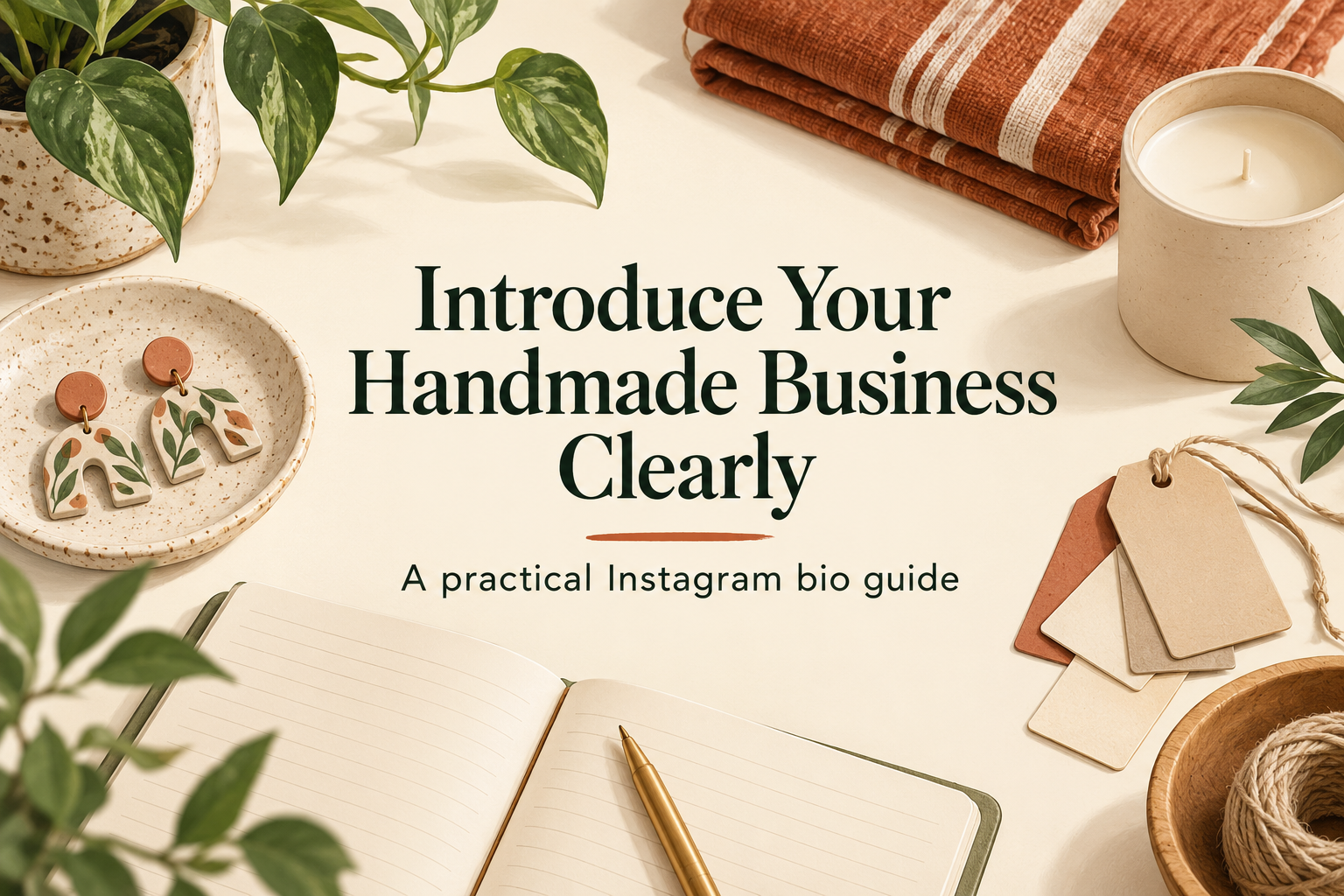
An Instagram bio for handmade business owners should help a new visitor answer three simple questions: what do you make, how can someone buy it, and what should they do next? A warm sentence about your craft can add personality, but it should not leave the visitor guessing about the product or the order process.
Start with the shop you actually run today. A maker selling finished earrings needs different wording from someone taking custom textile requests. The examples below are fictional writing demonstrations, not descriptions of real inventory, customer results or tested products. Use only the details that are true for your own business.
What Your Handmade Business Bio Needs to Explain
Give a newcomer enough information to recognize the offer. Name the product in ordinary language, add the most useful buying condition, and point toward one clear next step. “Handmade clay earrings” tells a visitor more than “Little pieces of happiness.” The second phrase can still belong in your brand voice, but it should not replace the product description.
Location matters when it changes the purchase. Local pickup, an in-person market or a limited delivery area may deserve space. If the shop serves customers through a straightforward online store, the current product range or ordering method may be more useful than a decorative location line.
Preview’s guide to business-bio essentials separates business identity, a useful distinction and a call to action. Treat those as questions to answer in your own words. You do not need to imitate a creative formula, claim an award or invent a customer count to make a small business understandable.
Write a Craft Business Bio Around Real Buyer Questions
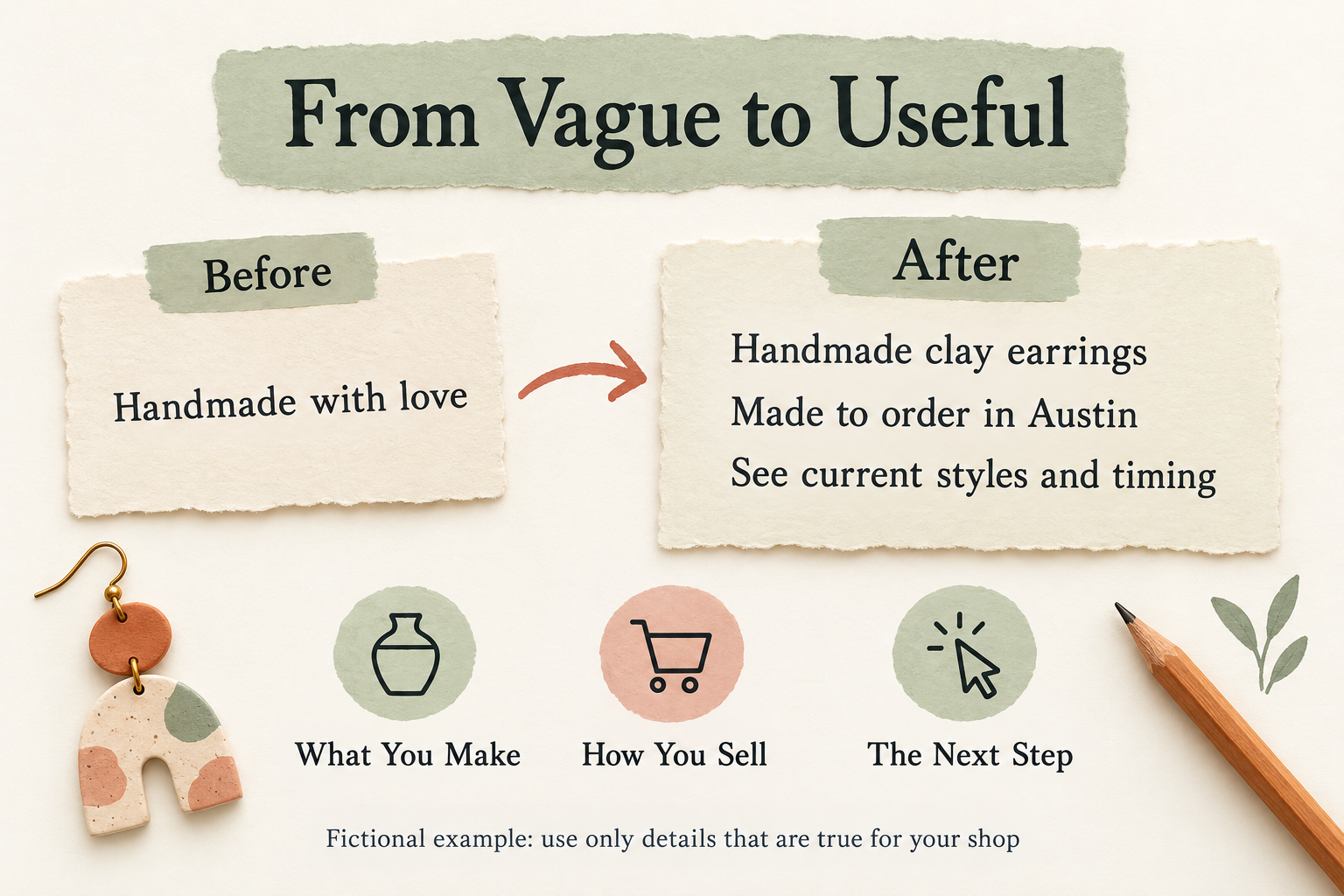
Draft from the questions a buyer would reasonably ask, rather than beginning with a string of adjectives. Can someone tell whether the photographed item is for sale? Is it finished stock or a made-to-order example? Does the next step lead to a shop, a request form or a genuine inquiry? Those answers determine what deserves the limited space.
A Made-to-Order Clay-Earring Shop
Imagine a maker in Austin who makes clay earrings to order. A first draft reading “Handmade with love” sounds friendly but does not explain the item or what happens after a visitor becomes interested. A clearer fictional version is: Handmade clay earrings. Made to order in Austin. See current styles and timing.
Each part has a job. The first names the product; the second explains the order model and location; the third tells the visitor what the next page will help them find. Keep “made to order” only if that is how you actually operate. If the business switches to finished stock, the bio should switch with it.
A Candle Maker Selling Finished Stock
Now imagine a maker whose finished candles are available through a store page. “DM to order” would create an unnecessary detour if the actual purchase happens in that store. A more useful fictional introduction is: Small-batch candles. Browse current scents in the shop. Product details and care below. Use the small-batch description only when it accurately describes the business.
This version emphasizes browsing what is available and finding the details before buying. It does not promise a custom scent service, a delivery date or a health benefit. The difference between these two examples is the business process, not just the tone of the writing.
Match the Bio Call to Action to the Way You Sell
Choose the action your business can reliably support. A shop invitation makes sense when a visitor can browse current items and complete the purchase there. A request-form invitation fits custom work when you need specifications before quoting. An inquiry invitation fits a conversation you actually monitor.
Check the wording against the experience after the tap. If the bio says “View available pieces,” the destination should show availability. If it says “Ask about a custom order,” the next page should explain what information to send. Do not use “Order now” for a page that only contains a gallery and no ordering instructions.
You can sound welcoming without implying constant availability. A clear next step is more useful than an untested promise of an instant response. Keep the product wording consistent with the posts a visitor has just seen; the handmade jewelry caption guide shows how to explain the real item and its details without inventing a story around it.
Keep the Bio Link Useful After the First Tap
The bio introduces the offer; the destination supplies what a short introduction cannot. Depending on the business, that may include current products, materials, measurements, prices, turnaround information, shipping conditions or a custom-request process. Give those details a clear place rather than squeezing every policy into the bio.
For the candle-maker example, care information needs more room than a few profile words. The National Candle Association’s candle safety guide is a useful resource when preparing that information: it covers attending a burning candle, keeping it away from flammable items and letting wax cool before moving it. A short bio is not a substitute for the product’s warning label and complete care instructions.
If the business needs separate destinations for its shop, custom requests and care information, use the guide to adding multiple Instagram bio links to consider that setup. Keep the labels specific to what each page actually provides. A long menu of unrelated destinations can make the promised next step harder to find.
Use Bio Line Breaks to Make the Details Readable
Give each short line a useful job instead of breaking every few words for appearance alone. One line can identify the product, another can explain a meaningful buying condition, and the final line can identify the next step. That arrangement is a starting point, not a mandatory template: combine or remove a line when it improves the introduction.
Read the draft on a phone before saving it. Check what wraps, whether punctuation becomes distracting and whether the main product name remains easy to spot. Plain letters are a sensible first choice when decorative lettering makes the sentence harder to read. Use the current editor to confirm what fits; do not assume every symbol, emoji or pasted layout will behave exactly as expected.
Review the Profile When Your Shop Changes
Update the bio when a meaningful fact changes: custom requests close, a market ends, the shop moves or a product line is no longer offered. Rewriting it constantly for novelty is less useful than keeping a stable introduction that accurately reflects the current business.
Before finishing, read the profile as a new buyer and follow the main link. Confirm that the product, order method and next step agree with the destination. A fresh introduction pointing to an outdated page still leaves the buyer with a problem. Remove any claim or service you cannot currently support.
Related reading: the guide to checking Instagram bio-link activity explains what link observations can and cannot tell you. Use that information alongside real customer questions to decide whether the destination is helping. Do not turn a few taps into a claim that a particular bio caused sales.