A custom order post on Instagram should help an interested person send a useful inquiry. It should explain what can be requested, what information you need and what happens before an order is accepted. A beautiful sample and the words “custom orders open” leave too many practical questions unanswered on their own.
The aim is not to fit every business policy into a caption. Give the reader enough context to decide whether to inquire, then direct them to the process you actually use. The pouch example below is fictional; no customer, deadline, price or accepted order is implied.
Say Which Custom Orders You Are Accepting
Define the available type of work. A maker who personalizes an existing pouch design is offering something different from designing any item from scratch. Name the product, the choices you can consider and any meaningful limits that help someone judge the fit.
Use a real sample or an accurately labeled concept. Explain whether the image shows an example, finished stock or a piece already made for someone else. A sample photograph should not quietly promise that every size, material or variation is possible.
Preview’s handmade-business caption guide covers product and shop communication. Use that broader context, then add the specific request boundaries your own process needs. Do not borrow urgency, availability or a happy-customer story that is not true.
Choose the Details Your Custom Order Form Needs
Ask for information that helps assess the work before collecting unnecessary personal details. The same questions can live in an inquiry form or a structured private conversation. A form is not mandatory, and a request should not be treated as accepted merely because someone completed it.
- The item or service: identify the product type or reference the actual sample.
- The requested choices: ask for relevant size, color, wording or other available options.
- The needed date: record it as a request to assess, not a confirmed completion date.
- The next contact step: explain where a response or further questions will happen.
For a fictional initials pouch, those details might identify the pouch style, the initials as they should appear, the offered fabric choice and the requested date. Do not ask someone to place their home address, order reference or private contact details in a public comment.
Write Custom Order Captions with One Clear Next Step
Choose one inquiry route you can monitor. “Send a request through the form” and “message me the details” are different processes. Explain which one is current, and avoid making a person repeat the same information in a comment, a direct message and an email.
A Fictional Pouch Request Post
A useful draft could say: “I’m accepting inquiries for initials pouches in the styles shown here. Send the style, offered fabric choice, initials and the date you have in mind through the inquiry form. I’ll review the request before confirming scope, price and timing.” Use that wording only if it matches the real offer and response process.
The invitation is specific without pretending that an inquiry guarantees a place in the queue. Preview’s business-caption guide discusses calls to action. For custom work, the useful action is a clear request, not pressure to commit before the details are understood.
If you already have a product page and a separate inquiry destination, the multiple-bio-links guide can help you consider that setup. Give each destination an accurate label; “shop available pieces” should not lead to a custom request form by surprise.
Review the Custom Request Before Confirming an Order
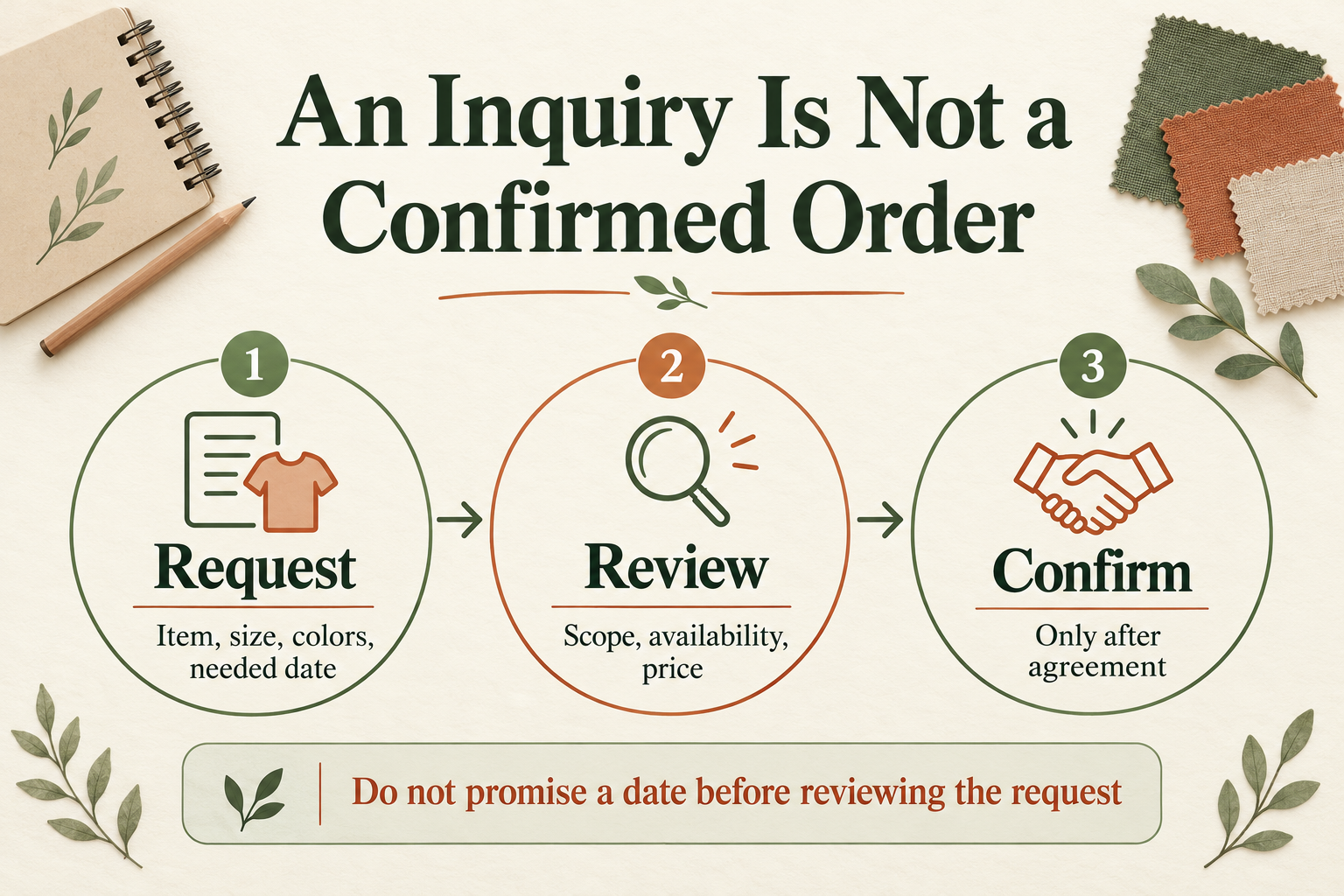
Check the requested work against your actual materials, options, skills and workload. Resolve missing information before promising a result or date. Describe the payment, changes and confirmation process you genuinely use rather than presenting a universal rule for custom businesses.
The sequence is simple: receive the request, review its details, then confirm only after the necessary agreement. That is an operational distinction, not legal advice or a ready-made contract. Keep the customer informed about which stage they are at.
A photo of a past commission can illustrate an option only when you have the relevant permission and make its status clear. The handmade-jewelry caption guide explores similar distinctions around real product details and custom inquiries. Never publish a customer’s private wording or messages as sales material without permission.
Keep the Order Post Accurate When Capacity Changes
Review the post when inquiries close, the available choices change or the linked process becomes outdated. A past invitation should not send someone through a form that still appears to offer a service you have stopped accepting.
If a reply takes time, use an honest response expectation instead of repeatedly promising an immediate answer. Privacy controls and business service standards are separate. The related read-receipts guide explains one messaging control; it does not replace telling a customer what happens next.
Before publishing, read the caption from the buyer’s point of view and follow the route once. They should know what they can request, what information to send and why the inquiry still needs review. That clarity is more useful than a long list of conditions without an understandable next step.