A useful business break announcement tells customers what is changing, when it changes and what they should do next. You can pause new inquiries without pausing existing work, or stop dispatching while the shop remains open. Say which arrangement actually applies instead of assuming the word “closed” explains everything.
You do not need to disclose a personal reason for the break. Keep the public notice focused on the business information a customer needs. The illustrator example below is fictional and does not describe real dates, customers or service commitments.
Define What Changes During Your Business Break
List the activities separately before writing the announcement: new orders, current projects, dispatch, pickup and messages. Mark only the ones affected. This small preparation prevents a friendly notice from accidentally suggesting that paid work has been abandoned or an unattended shop still provides normal service.
If existing customers need a change to a promised arrangement, contact them through the established private route. A general Instagram post should not be their first or only source of important project-specific information. Keep their names, deadlines and order details out of the public explanation.
A short break in accepting work is also different from permanently closing a business. Use temporary wording when the change is temporary. Do not choose a dramatic closure headline just because it attracts attention; it can send the wrong message about the service that remains available.
Put the Dates in the Business Break Notice
Give the actual start and end dates, including the year when an old post might otherwise be confusing. If you expect to reopen inquiries on a particular day, name that day. “Back soon” leaves a customer guessing when to check again or whether to make another arrangement.
Distinguish returning to work from completing every waiting task. Reopening an inbox does not mean every message receives a reply that morning. If your return date is uncertain, explain where the next reliable update will appear rather than making a promise you cannot yet support.
Preview’s caption-writing guide recommends choosing one clear takeaway before writing. For this notice, the takeaway is the practical availability change. A personal story is optional; the dates and affected activity carry the useful information.
Write a Business Announcement That Separates Orders and Inquiries
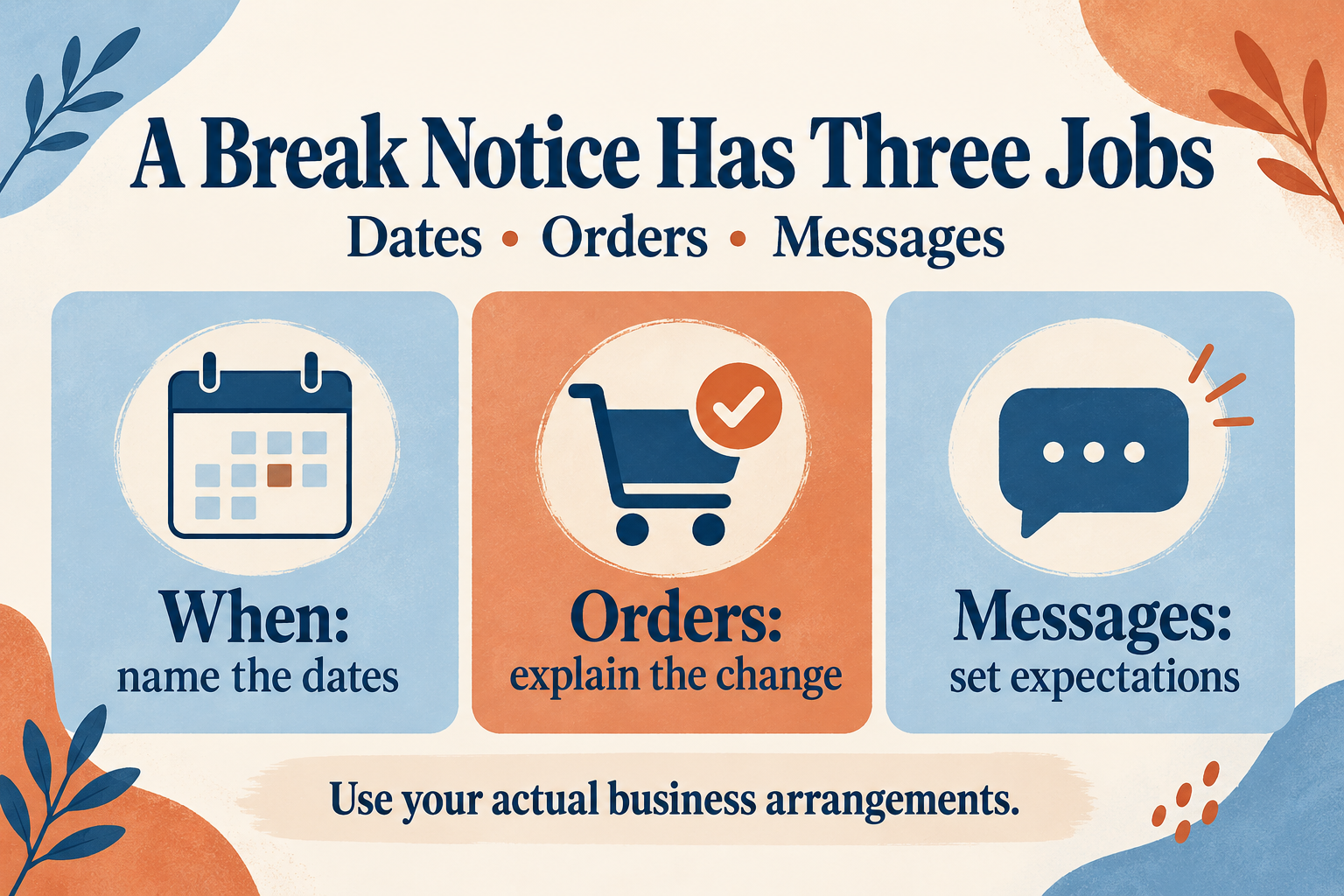
Imagine an illustrator who will finish agreed projects while temporarily pausing new inquiries. A suitable draft could say: “New illustration inquiries pause from [start date] through [end date]. Current projects continue under the arrangements already agreed with each client. I expect to reopen the inquiry form on [date].” Those statements belong in the post only if they accurately describe the real situation.
A shop that pauses dispatch needs different wording. It might explain which dispatch dates are affected and where a buyer can check current order information. Do not reuse the illustrator’s “current projects continue” line if that would hide a change to your own commitments.
Preview’s business-caption guide provides context for announcements and clear calls to action. Here the next step could be reading the current availability page. It should not be an invitation to submit a request through a form nobody will monitor.
Keep the profile consistent with the notice. The multiple-bio-links guide helps when a portfolio should remain reachable while an inquiry destination changes. Check the actual page and its label rather than relying on the caption alone.
Set Message Expectations in the Break Announcement
Explain whether messages will be monitored, whether replies will resume later and where an existing customer should use an already agreed contact route. Only describe an urgent-contact arrangement if one genuinely exists. Do not invent an emergency inbox to make the announcement look complete.
Reading a message and being available to work are different things. The read-receipts guide covers a privacy control, but changing that setting does not tell a customer how the business is operating. The notice still needs an honest expectation about communication.
If someone asks a general public question, answer only what is appropriate to share. Order-specific updates belong in private communication. A customer should not need to post a reference number publicly just to find out whether the break affects their purchase.
Review the Notice When Your Business Returns
When the pause ends, confirm what has reopened and remove contradictory wording from the current inquiry route. If the plan changes, update the notice clearly. Avoid leaving a temporary break message as the most prominent explanation of a business that has already resumed normal work.
Related reading: the pinned-comment guide explains one way to keep a useful public clarification visible. Use an accurate update rather than private customer information. Before the next break, keep the operational facts that were useful and rewrite the dates and arrangements from the current plan.