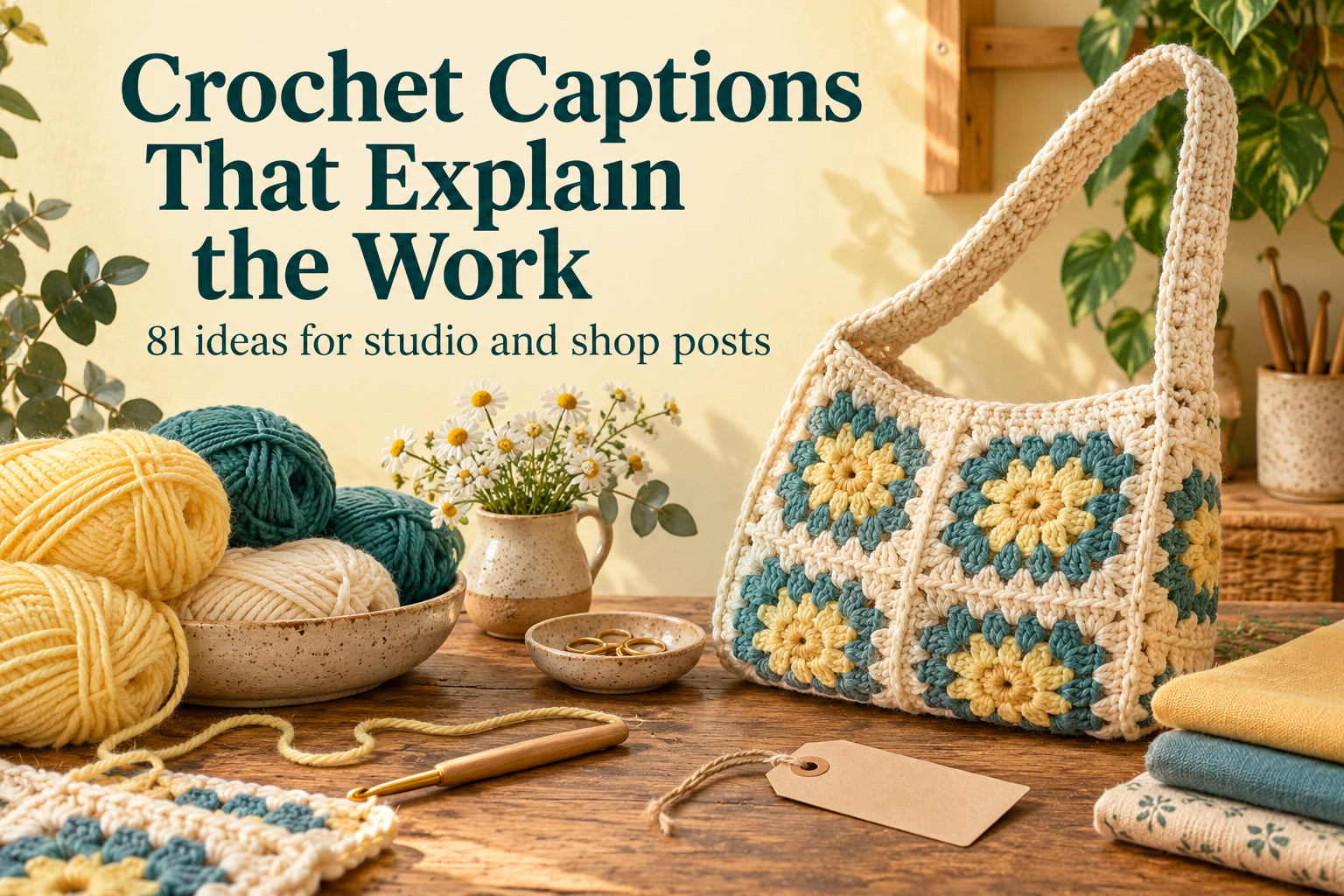
These 81 Instagram captions for crochet business posts are built around what a shopper or fellow maker can actually see: work in progress, stitch details, product dimensions, current order options and packing. Choose the section that matches the photograph rather than forcing every post into a sales announcement.
Each line is an original example to adapt, not a report about our own products or customers. Keep first-person claims only when true, replace bracketed details and remove any statement you cannot verify. Do not imply that a piece is available, suitable for a use or made from a particular fiber simply because the wording sounds appealing.
Crochet Studio and Work-in-Progress Captions
Choose a line that matches the stage in the photo. A first-person making statement should be true for your process; a test piece should not be presented as finished stock. Keep pattern credits and any relevant permissions accurate.
- This is where [piece] begins: the chosen yarn, the hook and the first section taking shape.
- A work-in-progress view of [project], before the finishing details change how it looks.
- The color choice came first. Today I’m checking how it reads across a larger section.
- One corner of the worktable, with the current [piece] still on the hook.
- This sample is helping me compare [option A] and [option B] before deciding on the finished version.
- The quiet stage today is checking the edges, not starting another piece.
- A closer look at the section I usually hide in the background of a finished-product photo.
- The shape is beginning to appear. The next step is [actual stage], not a shop launch yet.
- Here is the difference between the first small sample and the current version of [piece].
- Keeping the project notes beside the yarn so I can explain the choices in this design.
- Today’s progress is one useful section, photographed before I put the project away.
- A view from the making side of [piece]. The finished item will have its own introduction.
- Following [credited pattern, when applicable] and making notes on the colors chosen for this version.
Stitches, Yarn and Close-Up Crochet Captions
Use detail photos to answer a real product question. Name fibers, techniques or design credits only when you can support them. A visible texture does not prove durability, skin suitability or a particular care routine.
- This close-up shows the texture of [piece] more clearly than the full shelf photo.
- Two yarn colors in the same daylight, so you can compare the shades without a filter.
- The edge deserves a photograph too. Here is the finishing detail on [piece].
- A small section of the stitch pattern, shown next to the finished shape.
- The yarn used for this item is [verified fiber information]. The listing has the remaining details.
- Which angle makes the texture easier to understand: the overhead view or the side view?
- This is the joining detail between the two sections of [piece].
- The label information and the project notes tell a more accurate story than a guess about the fiber.
- Here is the actual color transition in this item, rather than a promise that every piece will look identical.
- The inside of the bag is part of the design too. Swipe for the construction detail.
- A closer view of the handle attachment, because the useful details are not always on the front.
- This photograph shows the finished surface before any packaging is added.
- Comparing [finish A] with [finish B] in the same frame, with the differences explained in the listing.
- The pattern credit for this version is [actual credit]. The yarn and color choices are listed separately.
Crochet Product Size and Fit Captions
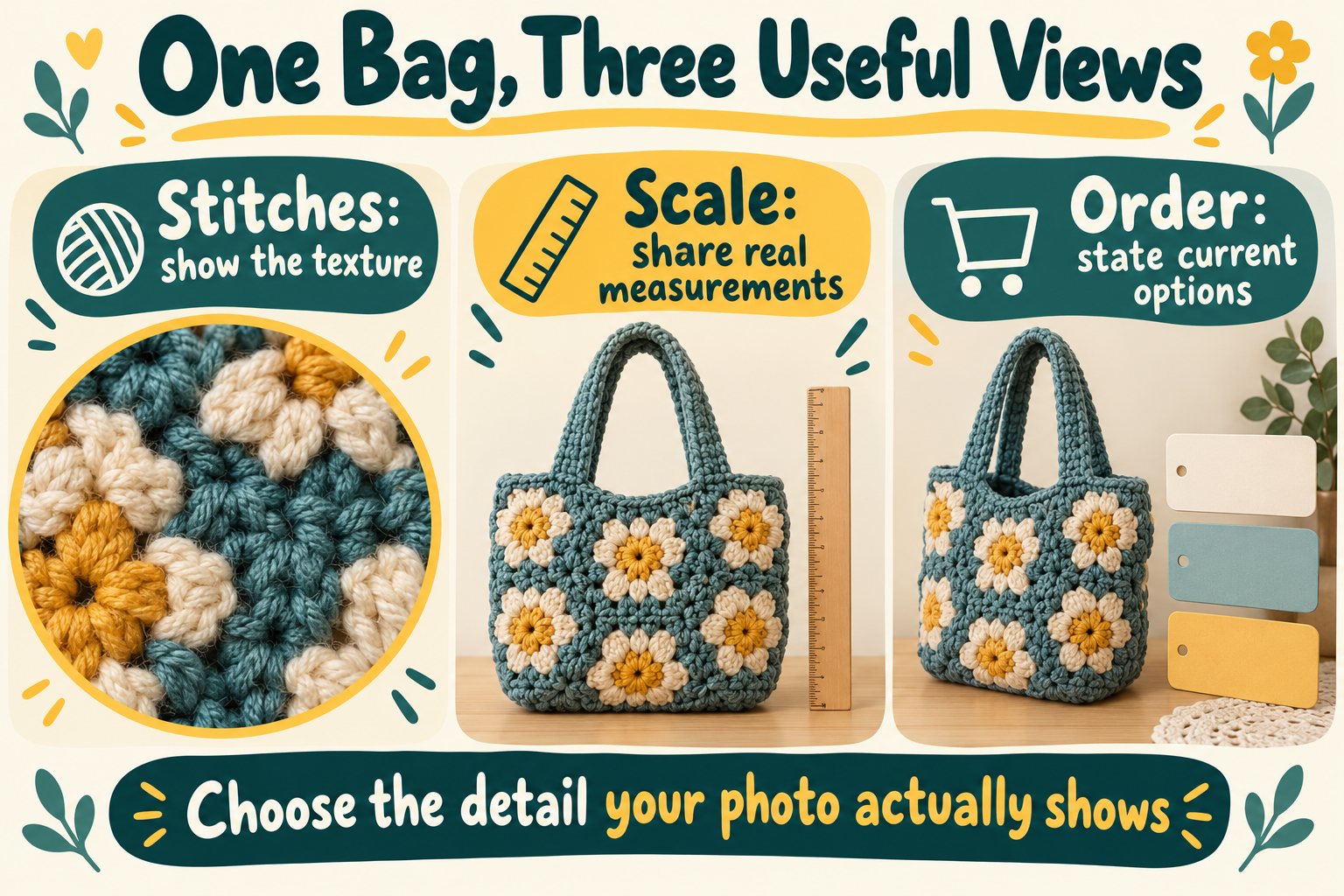
A shopper needs more than a pretty scale cue. Provide actual measurements where relevant and explain what the photo shows. Do not present a care suggestion or fit promise that is not appropriate for the specific item.
- Here is [piece] beside a ruler, with its actual dimensions in the product description.
- The full bag and the close-up tell different stories. This view shows its overall proportions.
- A side-by-side look at [size A] and [size B], photographed from the same distance.
- Before choosing [wearable], check the listed measurements rather than guessing from the photo.
- This is how the strap sits on the display. The listing gives its measured length.
- The opening is shown here so you can judge the shape, not just the outside color.
- Showing the piece from the back as well as the front, because both views can matter.
- The product page explains what is included; the props in this photograph are not part of the order.
- A folded view for the shelf, followed by the item opened out so its shape is easier to see.
- Wondering about the dimensions of [piece]? I added a clear measurement photo to the listing.
- The care information belongs to this exact item and its verified materials. Please read it before choosing.
- A useful comparison: the same design in [two verified options], with the differences described plainly.
Custom Crochet Orders and Shop-Update Captions
Only invite requests when you actually accept them. Separate an inquiry from an accepted order, and avoid promising a completion date before reviewing the work. Replace every timing, quantity or option with current information.
- Custom requests for [item type] are [open/closed]. The inquiry page explains the information I need.
- Thinking about a different color combination? Start with the options I currently offer for [piece].
- For a custom inquiry, please send the item type, preferred colors and the date you have in mind.
- This is an example of [design], not a promise that every variation is possible.
- Before I confirm a custom request, I check the size, materials and current workload.
- Today’s shop update is [actual update]. The listing shows what is available now.
- A new view of [piece], with the current ordering information kept together on its product page.
- The next collection is being prepared. I’ll share confirmed availability when the details are ready.
- If a particular date matters, ask about the current process before treating a request as accepted.
- Two color options for the same [item]. The listing explains which choices are available today.
- The custom-order guide now answers [actual question], so the first inquiry can be more useful.
- Not every idea becomes an order. A short scope check helps confirm what I can actually make.
- Please use the current inquiry route for custom work rather than leaving personal details in a public comment.
- This finished [piece] shows one agreed option. Customer-specific details are shared only with permission.
- If you are comparing ready-made and made-to-order choices, check the listing before selecting a next step.
Finished Crochet Pieces and Collection Captions
Let a reveal explain the actual object or collection. The caption does not need a made-up origin story or a claim that it is a bestseller. Distinguish your own design from work made using someone else’s pattern.
- Finished and ready for a closer look: [piece name], shown here from three angles.
- The final color pairing is [actual colors]. This photo shows how they sit together across the piece.
- A new [item] on the display, with the details and current availability on its product page.
- This collection brings together [actual shared feature], while each item has its own measurements.
- From the first sample to this finished version, the main change was [real design decision].
- The last finishing step is complete. Here is the detail that changed the overall look.
- A collection view today, followed by individual photos so each piece can be understood on its own.
- The finished [piece] keeps the texture visible instead of hiding it under props.
- A simple introduction to [design name]: [accurate item description] in [verified option].
- This version follows [actual credited pattern]. Here are the choices specific to this finished item.
- One finished object, photographed clearly enough to see more than its front-facing display angle.
Crochet Packing and Customer-Question Captions
Packing and question posts can provide useful information without exposing a buyer. Hide addresses, order references and private messages. Use customer statements only when they are real and shared with the right permission.
- Packing [item] with the care information prepared for its actual materials.
- A final check of the listed option before this piece goes into its package.
- Here is what is included with this order type, without customer details in the photograph.
- The gift note stays private. This photo shows the packaging, not the message inside.
- A packing photo records preparation; the order update will give the actual dispatch information.
- Someone asked to see the bag opening more clearly. This is the photo I added in response.
- The useful question today was about [measurement]. Here is the checked answer.
- Showing the strap detail again, this time from the angle a shopper asked about.
- If you need the material information, it is written on the listing rather than left to a color guess.
- Thank you for asking what comes with [piece]. The packaging photo now makes that clearer.
- A customer photo can show a different view of the work. I share one only with permission.
- The care card is readable before the box closes, because it is part of using the item thoughtfully.
- Today’s packing bench has [actual item] ready for its next confirmed step.
- Keeping the piece in focus and the delivery label out of frame.
- A closer answer to a practical question: [specific verified feature], shown beside the finished item.
- Before the package is closed, I compare the contents with the order details one last time.
Match the Caption to the Photo Before Posting
Imagine a fictional crochet shoulder bag photographed three ways. A close-up can explain the texture, a measurement view can show scale, and a listing view can clarify the options currently offered. One caption about a cozy feeling does not answer all three questions. Choose the line that describes the actual view, then add the checked detail the shopper needs.
Preview’s handmade-business caption guide offers broader post situations, while its caption-writing guide develops the idea of choosing one clear message. Neither is a guarantee of reach or sales. Keep a useful caption readable before considering optional discovery words or tags.
A coherent shop identity helps too: the crochet username collection considers names for makers and shops. The same product photo also needs an informative image description. The guide to adding alt text to Instagram posts explains that separate task; use the actual visual details rather than copying a sales line into the description.
Related reading: the guide to adding multiple bio links helps when you genuinely need different destinations for ready-made stock and custom inquiries. Check that the destination fulfills the caption’s promise, and do not repeat unverified availability from an older post.